Documentos Técnicos
Especificações
Brand
RS ProProduct Type
Oscilloscope Probe
Probe Type
Differential
Attenuation
1:50, 1:500
Bandwidth
70MHz
Maximum Common Mode Input Voltage
1.5kV
Connector Type
BNC
Model Number
RSDPB5150
Number of Probes
1
Safety Category Level
CAT II, CAT III
Rise Time
5ns
Standards/Approvals
CE: EN500811 and 500821, IEC 10101
País de Origem
China
Detalhes do produto
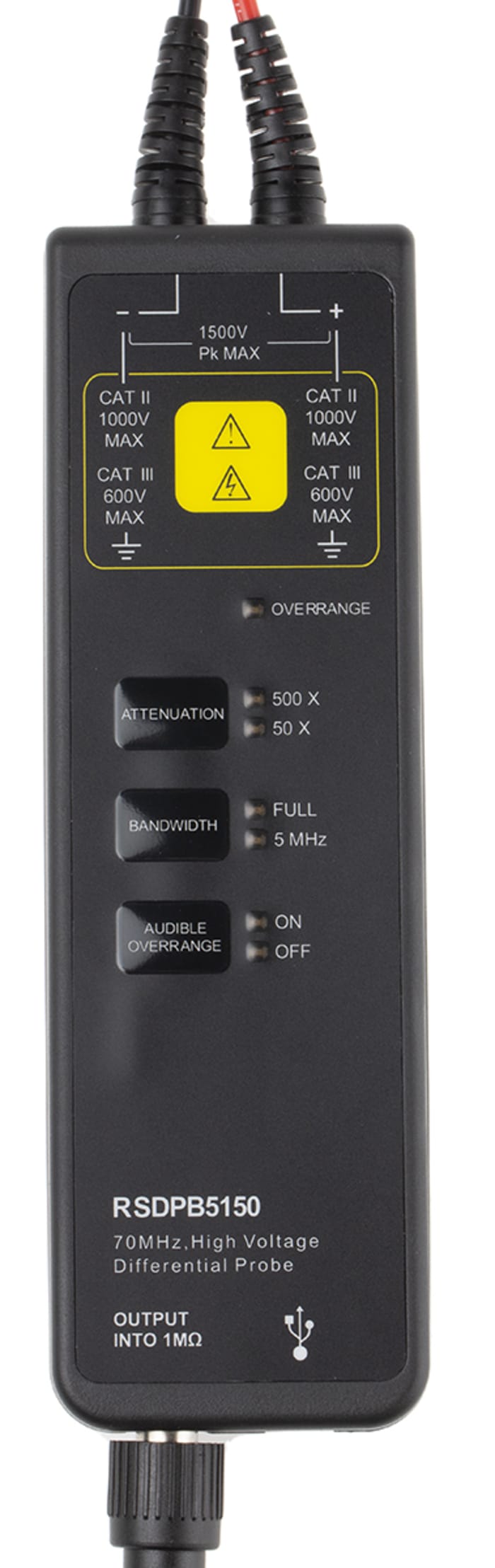
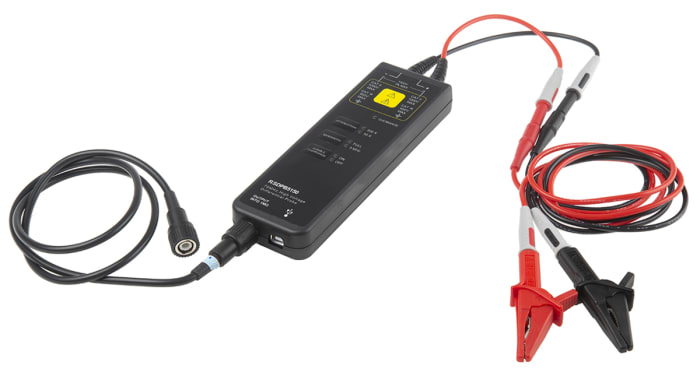
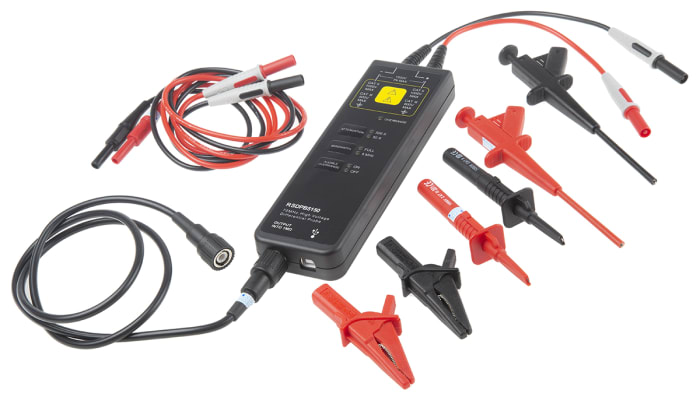
The RS PRO RSDPB5150 is a high voltage differential probe is a high-quality device designed to measure differential signals. They work with a conventional oscilloscope to display waveforms by measuring the voltage difference between two points to produce a much cleaner signal.
Design engineers are frequently turning to differential probes due to the advantages over single-ended probes when it comes to accuracy and ease of use. Differential probes can retain high common-mode rejection by removing the common noise. The true differential noise is extracted so you can see a more accurate signal on the oscilloscope screen.


Informações de estoque temporariamente indisponíveis.
R$ 19.917,96
R$ 19.917,96 Each (Sem VAT)
1
R$ 19.917,96
R$ 19.917,96 Each (Sem VAT)
Informações de estoque temporariamente indisponíveis.
1
Documentos Técnicos
Especificações
Brand
RS ProProduct Type
Oscilloscope Probe
Probe Type
Differential
Attenuation
1:50, 1:500
Bandwidth
70MHz
Maximum Common Mode Input Voltage
1.5kV
Connector Type
BNC
Model Number
RSDPB5150
Number of Probes
1
Safety Category Level
CAT II, CAT III
Rise Time
5ns
Standards/Approvals
CE: EN500811 and 500821, IEC 10101
País de Origem
China
Detalhes do produto
The RS PRO RSDPB5150 is a high voltage differential probe is a high-quality device designed to measure differential signals. They work with a conventional oscilloscope to display waveforms by measuring the voltage difference between two points to produce a much cleaner signal.
Design engineers are frequently turning to differential probes due to the advantages over single-ended probes when it comes to accuracy and ease of use. Differential probes can retain high common-mode rejection by removing the common noise. The true differential noise is extracted so you can see a more accurate signal on the oscilloscope screen.